
- EN 1090-certified truss: a safe audiovisual setup
- What is a truss, and why is it the key part of any stage structure?
- EN 1090 Certification: What it is and What it actually guarantees
- Truss Certification: EN 1090 is synonymous with safety for your Stage Structure.
- How can you verify that your truss manufacturer actually complies with regulations?
- What are the benefits of an EN 1090-certified truss?
- FANTEK: a Spanish manufacturer of trusses, towers, and platforms certified under EN 1090.
EN 1090-certified truss: a safe audiovisual setup
If your company assembles truss, towers, or stages without first verifying that the manufacturer is EN 1090-certified, you aren’t saving money: you’re taking a risk that could cost you your business, your liability insurance, and the reputation you’ve built over the years in the audiovisual industry.
EN 1090 certification is the European standard that governs the construction of steel and aluminum structures, and it is required for the CE marking of any structural component, including trusses.
In addition to EN 1090, each type of product has its own specific standard within the entertainment industry: EN 17115 for truss, EN 17206 for lifting towers, and EN 17736 for stage platforms and platforms.
FANTEK is the only Spanish manufacturer that manufactures in compliance with EN 1090 (certified by TÜV) and designs its trusses in compliance with EN 17115.
What is a truss, and why is it the key part of any stage structure?
A truss is a lattice structure, usually made of aluminum, consisting of tubes and diagonal members that form triangles or squares to distribute loads while keeping the weight as low as possible. It is the invisible skeleton of any stage structure: lighting, line arrays, and/or LED screens are suspended from it.
That’s why a truss isn’t a decorative element. It’s the component on which, quite literally, everything else depends to stay upright.
EN 1090 Certification: What it is and What it actually guarantees
EN 1090 is the harmonized European standard that regulates the construction of steel and aluminum structures. Since 2014, it has been mandatory for any structural component made from these materials to bear the CE marking, and it defines how the entire manufacturing process must be controlled: from raw materials to the finished product.
The fact that a manufacturer has EN 1090 certification is not just a decorative label in a marketing brochure. It has a very specific meaning:
- Qualified welders who weld according to a standardized and verified process.
- Complete traceability of all materials used (in the case of FANTEK, 6082-T6 aluminum) through to the finished product.
- Quality controls on each weld, verifying fusion and penetration using recognized testing methods.
- Structural engineering calculations for each part.
- A factory production control (FPC) system audited by an independent certification authority, which periodically verifies that all of the above requirements continue to be met.
At FANTEK, this process is certified by TÜV, one of the most rigorous certification authorities in Europe.
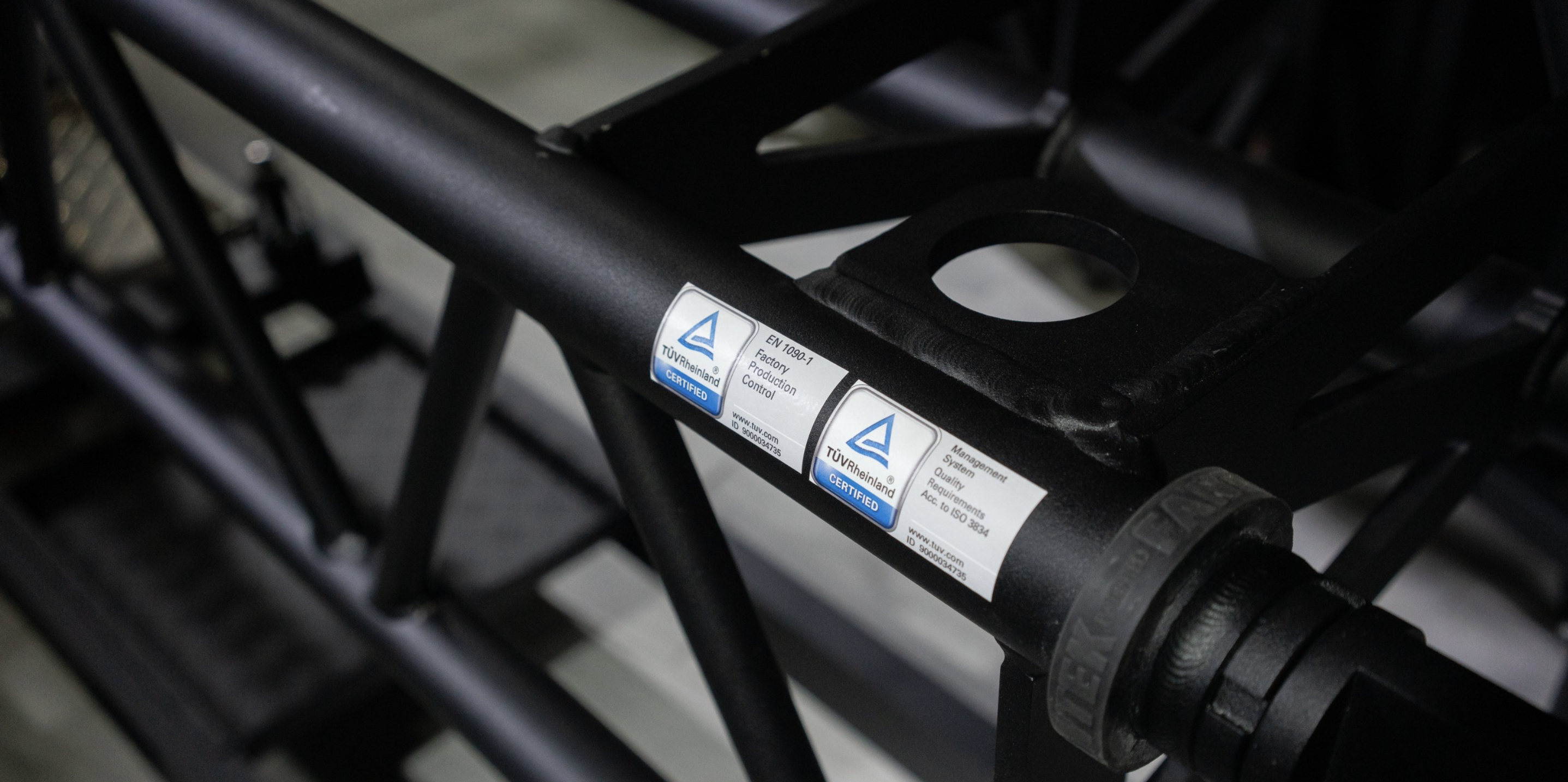
Truss Certification: EN 1090 is synonymous with safety for your Stage Structure.
When it comes to the structural safety of stages, many professionals in the industry fall short. The EN 1090 standard certifies how steel or aluminum structures are manufactured in general, but the entertainment industry has its own standards (which are much more specific for each type of product):
- EN 17115 — Specifications for the design and manufacture of steel and aluminum trusses. This standard defines how a stage truss must be designed and documented: calculation of distributed and point loads, analysis according to the Eurocodes, mandatory technical documentation, and inspection and rejection criteria.
- EN 17206 — Equipment for lifting and suspending loads on stages, applicable to lifting towers, ground supports, and hoists.
- EN 17736 — Specifications for the design and manufacture of aluminum stage platforms and frames, i.e., platforms.
And here’s the key fact that many people don’t know: without EN 1090 certification, no manufacturer can supply a truss that complies with EN 17115.
EN 1090 is the manufacturing requirement that makes it possible to subsequently comply with the specific product standard. A manufacturer can claim to “comply with European standards” without having either of these certifications. That’s why, when discussing truss certification with your supplier, the question isn’t “Do you have a certificate?” but rather “Can you show me the EN 1090 certificate and the design certificate in accordance with EN 17115?”
How can you verify that your truss manufacturer actually complies with regulations?
The best way to verify that your truss manufacturer actually complies with regulations is to request all the required technical documentation.
- Request the EN 1090 certificate issued by a recognized certification authority (such as TÜV), not an internal declaration from the manufacturer itself.
- Request the technical data sheet for each truss, including maximum loads by support type (UDL, CPL, TPL, QPL) and by span length.
- Ask about material traceability: Can they identify the aluminum batch for each component?
- Verify that the design complies with EN 17115, not just EN 1090.
- Be wary of prices that do not include certification: a truss without testing, structural calculations, and traceability will always cost less (and that “saving” translates directly into the high risk you assume).
At FANTEK, we have all these certificates available for you to review before you buy.
What are the benefits of an EN 1090-certified truss?
Beyond providing complete peace of mind, working with certified structures has very practical implications for an audiovisual production, rental, or installation business:
- Safer setups for the audience, your technical crew, and the artists.
- Fewer issues with your liability insurance, which supports setups backed by technical documentation and genuine certification.
- Access to bigger audiovisual projects, many of which already require EN 1090 or EN 17115 certification as a contracting requirement.
- Less legal exposure if something goes wrong, because you can demonstrate due diligence in the proper selection of your stage structures and systems supplier.
- A stronger brand image with event promoters, venues, customers, and regulatory authorities, who are increasingly establishing stricter standards as a measure of protection and safety.
Do you need truss, towers, and platforms for your next audiovisual project?
Tell us about your project, and at FANTEK we’ll help you find the best solution using our certified engineering products.
Tell us about your project
FANTEK: a Spanish manufacturer of trusses, towers, and platforms certified under EN 1090.
FANTEK is the only Spanish manufacturer that produces under EN 1090 certification (verified by TÜV) and that also designs and manufactures its trusses in accordance with the EN 17115 standard. This means, among other things, that entire production batches are rejected if they do not meet the quality requirements required by the certification (something not all manufacturers are willing to accept).
If you’re looking for a truss manufactured in Spain in accordance with the latest European regulations, that’s the guarantee you should demand. You can view all our certificates and our full range of trusses, lifting towers, and platforms at fantek.es
Yes. EN 1090 is a harmonized European standard, and compliance with it is mandatory in order to apply the CE marking to structural steel and aluminum components, a category that includes trusses. In practice, however, not all manufacturers operating in Spain comply with it or obtain certification from an external agency.
FANTEK is a Spanish manufacturer that operates in accordance with this standard, offering safety and transparency.
EN 1090 certifies the manufacturing process (welding, traceability, quality control) for steel and aluminum structures in general. EN 17115 is the specific standard for the design and manufacture of entertainment trusses, and it requires compliance with EN 1090 as a prerequisite.
Ask your manufacturer directly for the certificate, issued by a recognized certification authority such as TÜV. If they can't show it to you, they probably don't have it.
In addition to the direct structural risk, you assume greater legal liability in the event of an accident, and your liability insurance is likely to impose additional conditions or may not cover the claim at all if you can't prove the quality of the materials used.
News
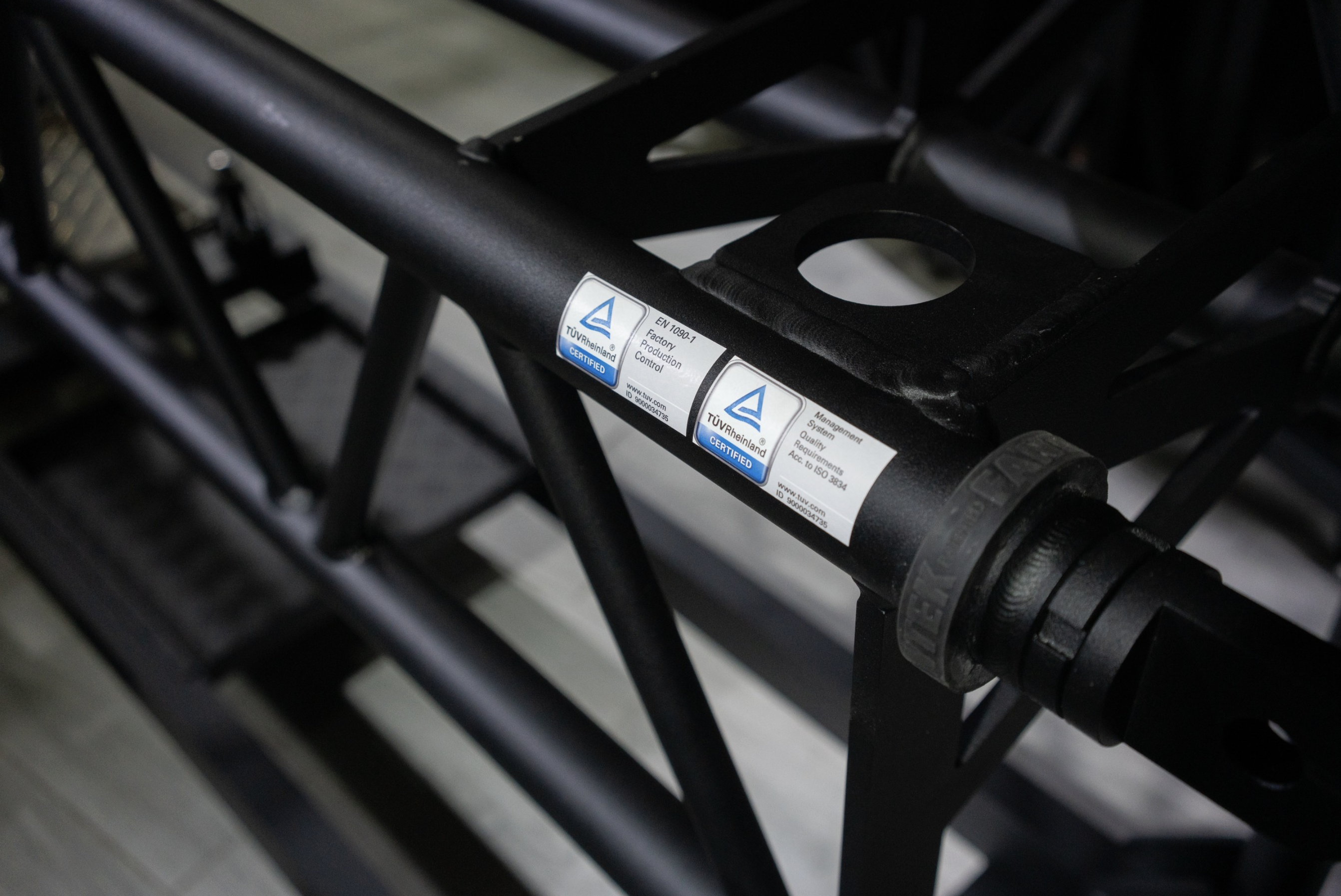
FANTEK: EN 1090-Certified Truss manufactured in Spain
Does your truss meet the EN 1090 certification? Find out what this standard requires for stage structures and why FANTEK is the only certified Spanish manufacturer to date.
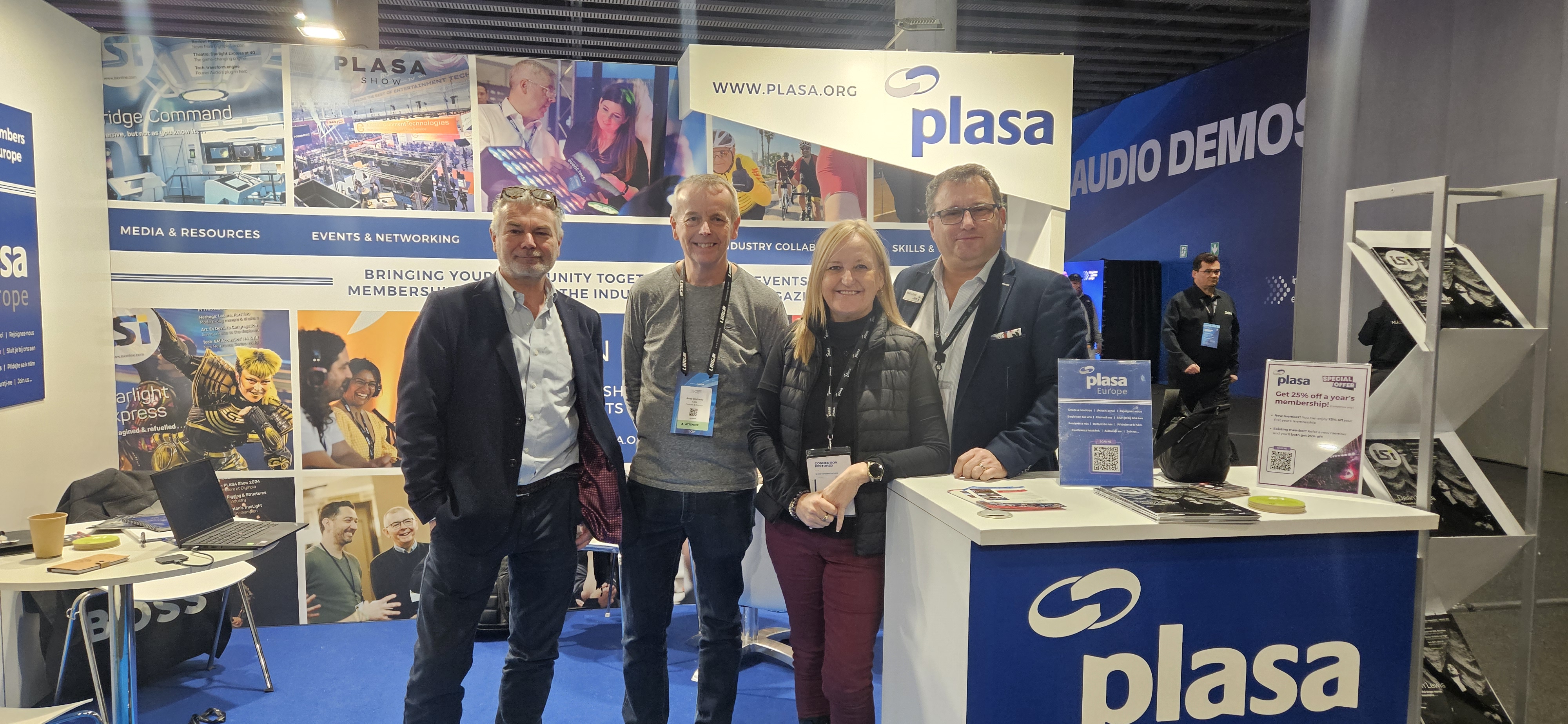
Celebrating Women in Entertainment Technology & Live Events for International Women’s Day
To mark International Women’s Day, we spoke with one of PLASA’s key figures to learn about her journey, her perspective on women’s role in the technical and audiovisual industry, and her advice for future generations. An inspiring conversation that highlights the talent, perseverance, and impact of women in our industry.
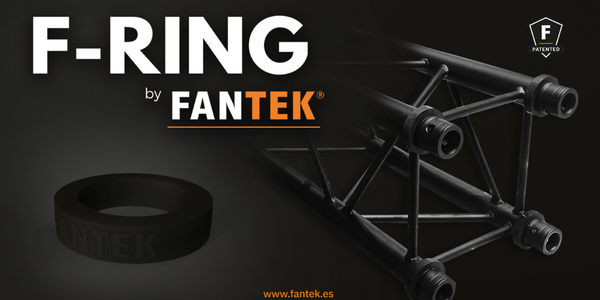
FANTEK's New FANTEK Ring® makes its debut at LDI Las Vegas
A simple solution that protects trusses from damage and scratches has been unveiled by FANTEK at the 2022 LDI Show in Las Vegas.
FANTEK: EN 1090-Certified Truss manufactured in Spain
Does your truss meet the EN 1090 certification? Find out what this standard requires for stage structures and why FANTEK is the only certified Spanish manufacturer to date.
Celebrating Women in Entertainment Technology & Live Events for International Women’s Day
To mark International Women’s Day, we spoke with one of PLASA’s key figures to learn about her journey, her perspective on women’s role in the technical and audiovisual industry, and her advice for future generations. An inspiring conversation that highlights the talent, perseverance, and impact of women in our industry.
FANTEK's New FANTEK Ring® makes its debut at LDI Las Vegas
A simple solution that protects trusses from damage and scratches has been unveiled by FANTEK at the 2022 LDI Show in Las Vegas.